Power banks in the skies just got a lot more complicated — here’s what every traveler needs to know
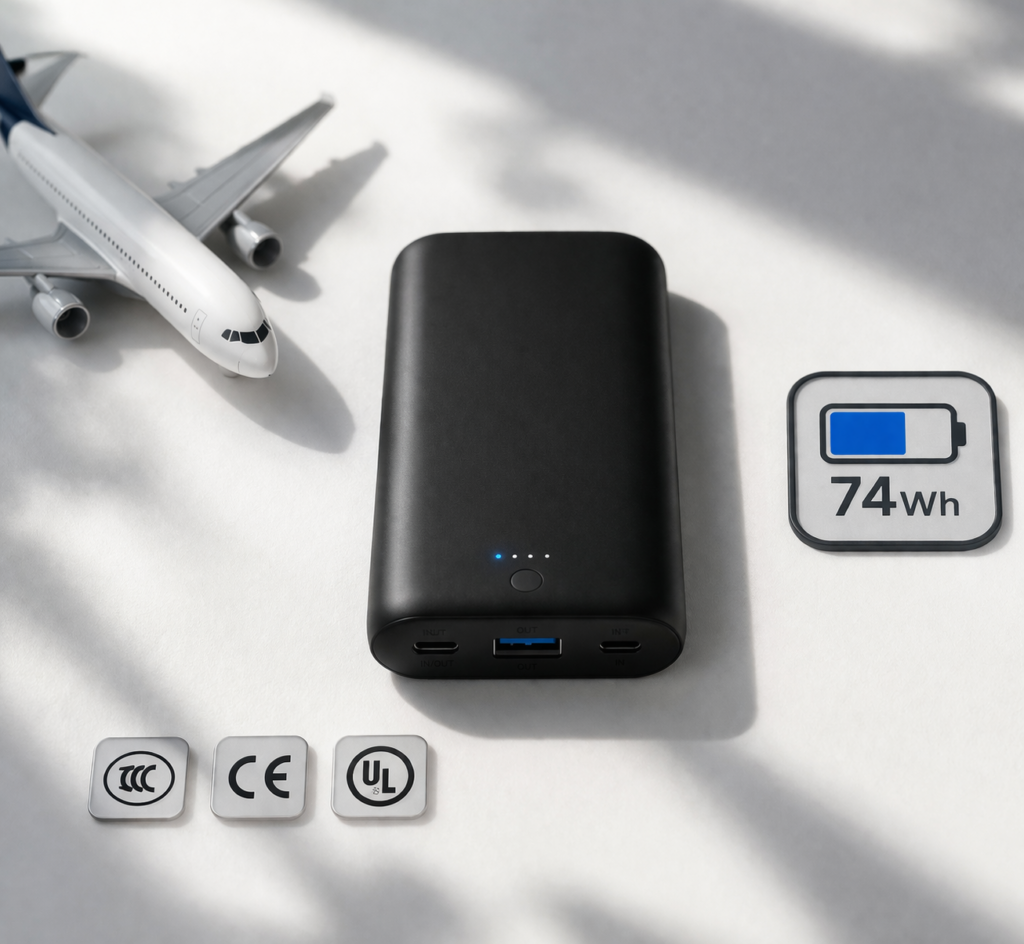
A single fire in a South Korean airport set off a global chain reaction. Airlines worldwide have rewritten the rules on power banks, and the consequences of getting it wrong could ground your trip before it starts.
It started with smoke in an overhead bin. On January 28, 2025, an Air Busan Airbus A321 was destroyed by fire on the ground at Gimhae Airport in South Korea. Investigators traced the cause to a power bank stored in the cabin. Within months, what had been a patchwork of airline advisories became a sweeping international overhaul — and as of March 27, 2026, the world has its first unified global standard for portable chargers on aircraft. Read the full ICAO announcement here.
“The days of casually tossing a power bank in your carry-on and forgetting about it are over. Today, it might cost you your boarding pass.”
The new global baseline (ICAO, March 27, 2026)
The International Civil Aviation Organization (ICAO) issued its new standard effective March 27, 2026: passengers may carry up to two power banks per person, strictly in carry-on baggage, and may not use them to charge devices during the flight. IATA had already moved in the same direction — banning in-flight charging from seat sockets in its 2026 Dangerous Goods Regulations (67th Edition) — and the ICAO ruling effectively codified what dozens of carriers had already implemented.
Know your watt-hours — the number that decides everything
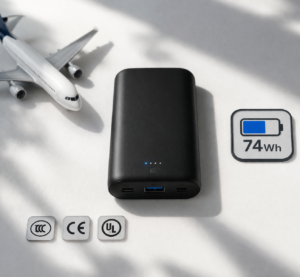
The single most important number on your power bank is its capacity in watt-hours (Wh). The rules are structured entirely around this figure. If your device only lists mAh, divide by 1,000 and multiply by 3.7V to convert. Check the IATA lithium battery guidance for full calculation guidance.
| UNDER 100 Wh Up to 5 units No approval needed | 100 – 160 Wh Max 2 units Airline pre-approval required | ABOVE 160 Wh Banned No exceptions on any flight | CHECKED BAGS Never allowed Global rule, no exceptions |
Note: All power banks must display their specifications visibly to pass airport security.
How airlines are going further than the ICAO floor
Many carriers have moved beyond the ICAO minimum. In December 2025, all three major Australian carriers — Qantas, Jetstar, and Virgin Australia — rolled out matching restrictions: no in-flight use, two-unit limit, and no overhead bin storage. The Lufthansa Group, covering eight airlines including SWISS, Austrian, and ITA Airways, unified its policy from January 15, 2026. India’s Directorate General of Civil Aviation (DGCA) extended a ban on in-flight use and charging to all flights operating to, from, and within the country.
The common thread: in-flight use is banned, and passengers are expected to store portable power within reach — under the seat or in a seat pocket — not in the overhead compartment. Always verify your airline’s specific policy before flying.
The certification question: it depends where you’re flying
Beyond capacity limits, some countries now require specific safety certifications stamped on the device itself. This is where rules diverge most significantly for international travelers.
| Mark | Region / Authority | What it covers |
| 3C | China CCC — China Compulsory Cert | Mandatory on all domestic Chinese flights since June 2025. From March 2026 must include a QR traceability code. UL/CE not accepted as substitutes. |
| CE | European Union CE Marking | Required for all power banks sold or used within the EU. Covers electromagnetic compatibility and low-voltage safety directives. |
| UL | United States UL 2056 | Key industry benchmark for portable battery packs. Certifies protection against short circuits, overcharging, and thermal runaway. |
| PSE | Japan Electrical Appliance Act | Mandatory for lithium-ion batteries sold in Japan. Increasingly referenced for compliance on Japanese carriers. |
Your pre-flight checklist
- Check the Wh rating on your power bank — it must be visible and legible to pass security.
- Keep all power banks in your carry-on — none in checked luggage, no exceptions.
- Carry no more than two power banks if flying internationally under the new ICAO standard.
- Do not charge devices from your power bank during the flight — not from your seat, not via USB.
- Store power banks under the seat or in the seat pocket — not in the overhead bin on most airlines.
- Flying to or within China? Verify your power bank carries a valid 3C mark with QR code before you leave home.
- Check your specific airline’s policy 24–48 hours before departure — carrier rules vary beyond the ICAO floor.
- Charge everything fully before you board — once in the air, your power bank is off-limits.
Useful official sources
IATA Lithium Battery Guidance for Passengers
FAA Pack Safe — Battery-Powered Devices
UK CAA — Travelling with Lithium Batteries
China SAMR — CCC Certification Portal
Australia CASR — Dangerous Goods Rules